
Pilates Reformer 101: A Beginner’s Guide to Choosing the Right Reformer in Australia

Think you need years of Pilates experience before buying a reformer? Think again. The right Pilates reformer can make your practice more engaging, adaptable and consistent, whether you are taking your first steps or building a professional studio.
But choosing one can feel overwhelming. What do the springs do? How much space do you need? Is a folding reformer enough for home use? And when is a commercial model worth the investment?
This Pilates Reformer 101 guide explains what to look for when buying Pilates equipment in Australia, so you can choose with confidence.
What is a Pilates reformer?
A Pilates reformer is a piece of exercise equipment designed to support a wide range of controlled movements. It uses a moving carriage, adjustable springs, a footbar and straps or ropes to create resistance as you push, pull, balance and stabilise.
Unlike a traditional mat session, the reformer gives you adjustable feedback throughout each movement. You can increase or decrease resistance, change your body position and adapt exercises to suit your experience and goals.
That versatility is why reformers suit home users, Pilates instructors, physiotherapy clinics, boutique studios and commercial gyms alike.
How does a Pilates reformer work?
A reformer combines your body weight with spring resistance. As you move the carriage, the springs provide tension and control the speed and range of movement.
Heavier resistance may offer more support during some foundational exercises, while lighter resistance can demand greater control and stability. The ideal setting depends on the exercise, your experience and the guidance you receive.
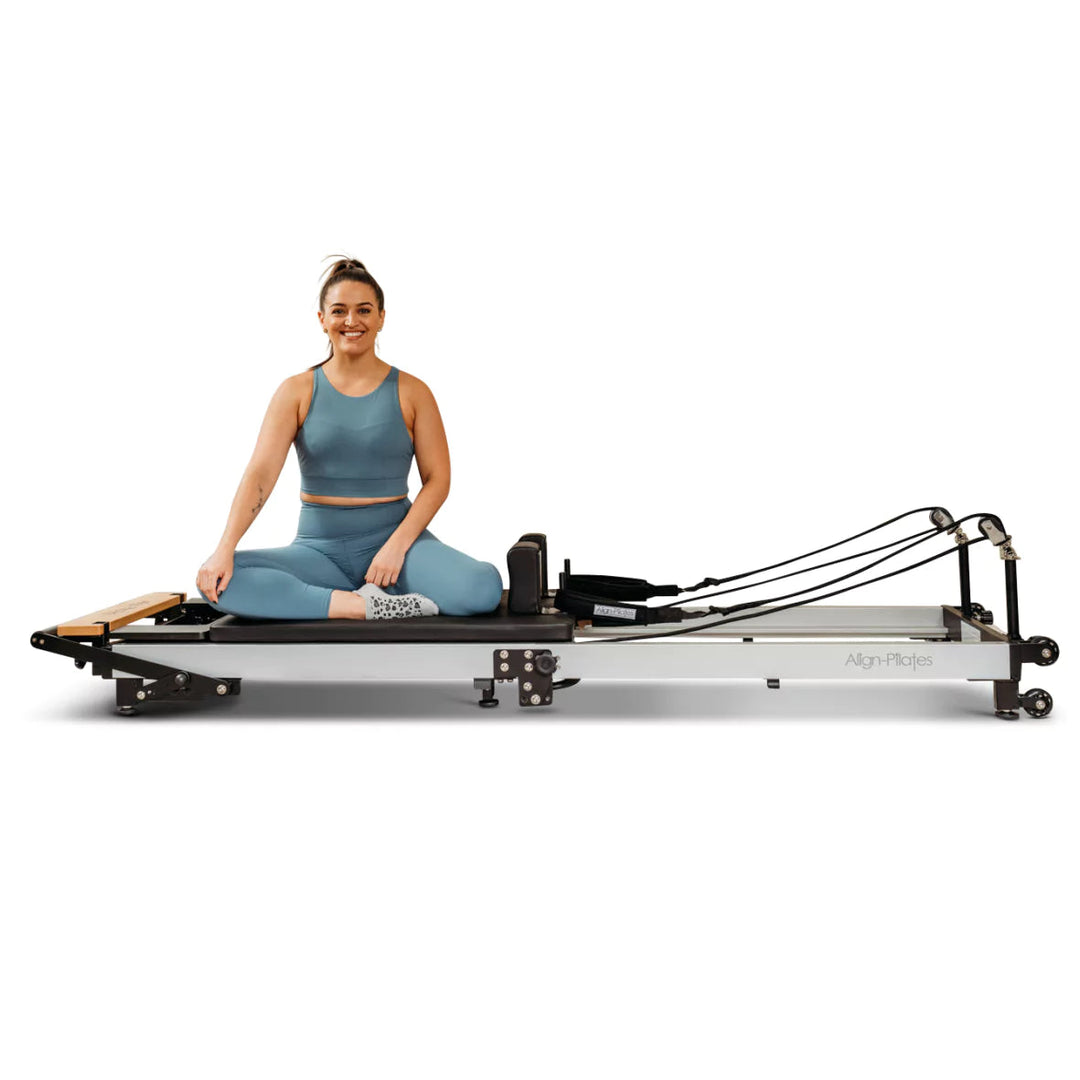
The main components include:
- Carriage: The padded platform that glides along rails. You may lie, sit, kneel or stand on it.
- Springs: Adjustable resistance springs that connect to the carriage and allow you to fine-tune the feel of each exercise.
- Footbar: A padded, adjustable bar used by your feet or hands to push against and move the carriage.
- Straps or ropes: Connected to pulleys, these let you work your arms, legs and core from different positions.
- Shoulder rests: Padded supports that help stabilise your body during exercises performed on your back.
- Headrest: An adjustable support that helps you find a comfortable position for different movements.
- Standing platform: A stable surface at the end of the reformer, used for selected standing, kneeling and transitional exercises.
Understanding these features helps you compare a Pilates reformer for sale based on how it will actually feel and function: not just how it looks online.
What are the benefits of reformer Pilates?
Reformer Pilates is popular because it offers variety without requiring high-impact movement. You can work through controlled exercises that challenge strength, balance, mobility and coordination.
A reformer may help you:
- Build a more consistent exercise routine.
- Challenge your muscles through adjustable resistance.
- Practise controlled movement and body awareness.
- Add variety to your home workouts.
- Progress exercises as your confidence improves.
- Create a focused space for movement and mental reset.
The biggest benefit is often consistency. If your reformer is comfortable, easy to adjust and suited to your space, you are more likely to use it regularly. That can make it a valuable part of a long-term lifestyle: not another piece of equipment gathering dust.
Who is a Pilates reformer suitable for?
A reformer can suit beginners, experienced Pilates users and instructors, provided the equipment matches the intended use.
You might consider a reformer if you are:
- Starting Pilates at home.
- Moving on from mat-based sessions.
- Looking for a low-impact way to exercise.
- Setting up a dedicated home gym or wellness room.
- Teaching private or group classes.
- Opening a Pilates studio.
- Adding Pilates equipment to a clinic or commercial gym.
Your experience level matters, but it should not be the only deciding factor. A well-designed beginner reformer can also support progression, while a more advanced model may be appropriate if multiple people will use it or you plan to teach.
If you have an injury, health concern, are pregnant or are returning to exercise after a long break, seek advice from an appropriately qualified health or Pilates professional before starting. Qualified instruction is especially important when learning how to adjust springs, mount the carriage and perform unfamiliar exercises.
How to choose the right home Pilates reformer
1. Start with your available space
Measure the room before you shop. A reformer needs more than its own footprint because you also need space to move around it, access the straps and safely perform exercises at either end.
Think about:
- The reformer’s assembled length and width.
- Ceiling height if you are considering leg extensions or a Cadillac frame.
- Clear space beside the carriage.
- Doorways, stairs and lift access.
- Whether the reformer needs to share space with other equipment.
- How it will be delivered into your home.
For smaller rooms, a folding model may be a practical solution. The Align-Pilates F3 Folding Reformer is designed to fold for storage and includes wheels to help with relocation. It measures 242 cm long when unfolded and folds to a more compact storage profile.
2. Decide how often you will use it
Will you use your reformer once or twice a week, or will it be part of your daily routine?
Occasional users may prioritise:
- Straightforward adjustments.
- Comfortable padding.
- A compact footprint.
- Easy storage.
- A sensible entry point into reformer Pilates.
Frequent users should look more closely at:
- Frame construction.
- Carriage stability and smoothness.
- Spring quality and replacement availability.
- Upholstery durability.
- Warranty and local support.
- The range of available accessories.
A cheaper reformer is not always better value if you quickly outgrow its adjustments or struggle to source replacement parts. Buying for your likely usage: not only your current experience: can save you from upgrading too soon.
3. Check the carriage and frame
The carriage should glide smoothly and feel stable rather than rattly or uneven. Comfortable, supportive padding also matters because many exercises involve lying, kneeling or sitting on the carriage.
Look for a frame that feels solid enough for your intended use. Home users may value a lighter or foldable design, while studios need equipment built for repeated sessions and quick transitions between users.
4. Compare spring resistance
Springs are central to the reformer experience. Look for a useful range of tensions rather than a single resistance level.
A good beginner-friendly system should offer:
- Multiple spring strengths.
- Clear spring positions.
- Easy attachment and removal.
- Secure clips and fittings.
- Replacement springs available through local support.
Always follow the manufacturer’s instructions when changing springs. Keep the carriage controlled, and make sure you understand how the spring bar operates before beginning a workout.
5. Look for an adjustable footbar
A footbar with several positions gives you more ways to adapt the reformer to your height, proportions and the exercise being performed.
An adjustable footbar can improve comfort and make transitions easier. It is particularly useful if more than one person will use the reformer.
For example, the Align Pilates R8 Reformer includes five footbar positions, including a flat position, along with adjustable pulley risers and a rapid-change spring bar. It is positioned as a light-commercial reformer, making it an option for serious home users as well as selected professional settings.

6. Consider adjustability and user experience
The more people using a reformer, the more important quick adjustment becomes.
Features worth comparing include:
- Headrest positions.
- Shoulder-rest width and removal.
- Footbar positions.
- Rope or strap length adjustment.
- Spring-bar design.
- Wheel systems for movement.
- Storage or stacking options.
If you are setting up a studio, small time savings between classes can make a real difference. The Align-Pilates C8 Pro Reformer includes a rapid-change spring bar, adjustable rope lengths, removable shoulder rests and options for freestanding or stacked storage.
Home, commercial or studio-grade reformer?
Your intended setting should guide your shortlist.
Home reformer
A home Pilates reformer should balance performance with practicality. Folding features, wheels and a manageable footprint may be especially valuable if your reformer shares a room or needs to be stored between sessions.
Explore the home Pilates reformer range for options designed around personal use and smaller spaces.
Commercial reformer
A commercial reformer needs to handle more frequent use and accommodate a wider range of users. Durable construction, fast adjustments, strong warranty support and accessory compatibility become increasingly important.
Browse the commercial Pilates reformer collection if you are equipping a studio, clinic or gym.
Studio setup
Opening a studio involves more than choosing individual machines. You may need to plan room layout, spacing, delivery, installation, accessories and future expansion.
The Fitness Solution can help with studio equipment planning through The Pilates Solution and its Pilates studio setup service.
Which Pilates accessories do you need?
You can begin with the reformer itself, but accessories can expand your exercise options.
Depending on your model and goals, you may consider:
- A sitting box.
- A jump board.
- A platform extender.
- Leg extenders.
- A gondola pole.
- A Pilates ring.
- A mattress conversion.
- Cleaning and maintenance products.
Always check compatibility before ordering accessories. Browse the full range of Pilates reformer accessories to see what is available for your equipment.
Pilates reformer buying checklist
Before purchasing a Pilates reformer in Australia, ask yourself:
- Where will the reformer be used?
- Have I measured the room and access points?
- Will I need folding or wheeled storage?
- How often will I use it?
- Is the carriage comfortable and smooth?
- Does it offer several spring resistance levels?
- Is the footbar adjustable?
- Can the headrest and shoulder rests be adjusted?
- Does the model suit my height and weight?
- Are replacement parts and local support available?
- Which accessories are compatible?
- Can I try the reformer before buying?
- Do I need delivery, assembly or installation?
- Would hiring first be suitable for my situation?
Find your Pilates reformer with The Fitness Solution
The Fitness Solution is the Victorian distributor for Align-Pilates, offering home, commercial and clinical reformer options alongside a broad range of Pilates equipment Australia-wide.
You can compare models, ask questions and try selected reformers at the Berwick showroom, located at 90 Enterprise Avenue, Berwick VIC 3806. The team can help you compare footprints, adjustment systems, accessories and intended usage before you commit.
Try-before-you-buy advice can be especially valuable when you are unsure how a carriage should feel or which features matter most. Hire options may also be available where suitable, so contact the team to discuss your needs.
Ready to start? Explore the Align-Pilates reformer collection or contact The Fitness Solution for expert guidance.