
Treadmill vs Exercise Bike: Which Is Better for Your Home Cardio Goals?

Think a treadmill is automatically the best home cardio machine because it burns more calories? Or perhaps you assume an exercise bike is only suitable for beginners?
Neither assumption tells the full story.
The best choice depends on how you want to train, how your body responds to impact, how much room you have and which machine you are most likely to use consistently. A quality electric treadmill can support walking, running and structured incline workouts, while an exercise bike delivers smooth, low-impact cardio in a compact and comfortable format.
So, which one belongs in your home gym?
Let’s compare treadmills and exercise bikes across the factors that matter most to Australian home-gym shoppers.
Treadmill vs exercise bike: the quick comparison
| Consideration | Electric treadmill | Exercise bike |
|---|---|---|
| Main movement | Walking, jogging and running | Seated or standing cycling |
| Joint impact | Low during walking; higher during jogging and running | Very low impact |
| Muscles involved | Legs, glutes, core and stabilising muscles | Primarily quads, hamstrings, glutes and calves |
| Intensity control | Speed and incline | Resistance and cadence |
| Space required | Larger footprint; some models fold | Usually more compact |
| Noise | Motor noise plus footfall | Generally quieter |
| Best for | Walking, running, step goals and incline training | Low-impact cardio, intervals and frequent workouts |
| Maintenance | Belt, deck and motor require regular care | Usually simpler maintenance |
| Accessibility | Requires balance and confident foot placement | Seated options can feel more supportive |
Both machines can improve cardiovascular fitness, support weight-management goals and make it easier to exercise year-round. The important question is not “Which machine is superior?” It is “Which machine suits your goals and your household?”
Walking and running versus cycling
The movement pattern is the biggest difference.
A treadmill recreates outdoor walking or running. You control the pace, raise the incline and practise the same basic movement you might use for daily steps, road running or an upcoming event. If you want to build walking endurance or train for a fun run, an electric treadmill gives you a highly specific training tool.
An exercise bike uses a circular pedalling motion. You can ride steadily, increase the resistance or perform short, challenging intervals without leaving the seat. It is particularly useful when you want reliable cardio but prefer to avoid repeated foot strikes.
Would you rather walk while watching a show, or pedal through a fast interval session? Your answer may reveal which machine you will use more often.
Which machine is kinder to your joints?
An exercise bike is generally the more joint-friendly option because your body is supported by the seat and your feet stay connected to the pedals. Cycling avoids the repeated impact associated with jogging and running, making it an appealing choice for people managing joint discomfort, returning from certain injuries or seeking lower-impact exercise.
A treadmill is not automatically high impact. Comfortable walking at a sensible pace places considerably less stress on the body than running. However, as speed and incline increase, so can the demands on your ankles, knees, hips and lower back.
If you experience persistent pain, have a diagnosed condition or are returning to exercise after an injury, speak with an appropriate health professional before choosing your equipment. For many users, an upright or recumbent exercise bike provides an easier starting point. For others, walking on a supportive treadmill remains a comfortable and effective option.
The benefit is simple: choosing the right impact level helps you train consistently instead of repeatedly stopping and starting.
Muscle involvement and training feel
A treadmill keeps you upright and requires you to support your body as you move. Walking and running recruit the calves, hamstrings, quadriceps and glutes, while your core and stabilising muscles help you maintain posture and balance. Incline walking can increase the demand on your posterior chain without requiring you to run.
An exercise bike focuses more directly on the lower body. Resistance challenges the quads, hamstrings, glutes and calves, while higher cadence raises the cardiovascular demand. Some spin bikes also allow standing efforts, creating a more demanding full-body training feel than a relaxed seated ride.
Neither machine replaces strength equipment such as dumbbells, barbells or a functional trainer. However, both can become an excellent part of a broader home gym setup by improving endurance and helping you warm up before strength training.
Cardio intensity: speed and incline versus resistance
Both treadmills and exercise bikes let you control intensity precisely, but they do it differently.
Electric treadmill controls
With an electric treadmill, you can:
- Start with an easy walk.
- Increase speed gradually for a brisk effort.
- Add incline to simulate hills.
- Alternate walking and jogging.
- Perform short speed or incline intervals.
This makes a treadmill valuable for progressive training. You can begin with ten minutes of walking and slowly build towards longer sessions, faster paces or more challenging hills.
Exercise bike controls
With an exercise bike, you can:
- Pedal lightly for recovery or warm-ups.
- Increase resistance for hill-style efforts.
- Raise cadence for short intervals.
- Complete longer steady-state sessions.
- Train hard without repeated impact.
A bike can also make intensity adjustments feel smooth and immediate. If your legs feel tired, reduce the resistance. If you have more to give, add a level and keep pedalling.
Calorie burn varies according to your body size, workout duration and effort. A harder workout on either machine can be more demanding than an easy workout on the other. Consistency matters more than choosing equipment based on a headline calorie estimate.

Comfort, accessibility and household use
Comfort often decides whether home gym equipment becomes part of your lifestyle or ends up unused.
A treadmill suits people who enjoy natural walking or running and feel confident moving on a moving belt. It can also be a practical option for households where several people want to track steps, improve walking fitness or train for different running goals.
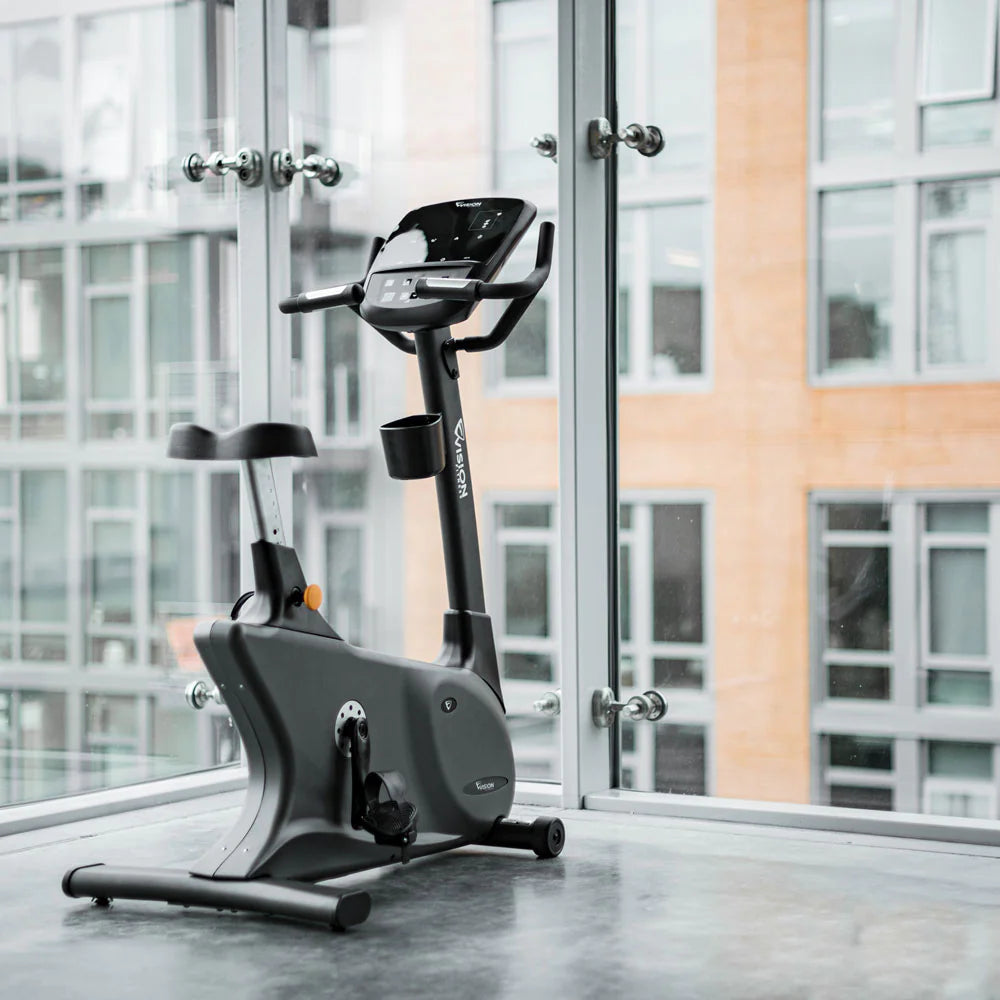
An exercise bike offers a seated position and consistent support. That can make it more approachable for beginners, older household members or anyone who feels less confident with balance. A recumbent bike provides even more back support, while an upright bike keeps the footprint smaller and the riding position more active.
Who will use the machine most? And will other people in your household use it too? If several users have different needs, comfort and adjustability should be priorities when you compare fitness equipment for sale.
Space, noise and storage
Space is one of the most practical differences between these machines.
Treadmills are usually longer, wider and heavier. Folding models can help you reclaim floor space after a workout, but you still need a clear area around the machine for safe access and movement. Measure doorways, ceiling height, storage areas and the complete operating footprint before you buy gym equipment.
Exercise bikes are generally easier to place in a spare bedroom, apartment or compact training area. Upright bikes use relatively little floor space, while recumbent bikes need a longer footprint but offer a more supported ride.
Noise matters too. A treadmill produces motor noise and the sound of footfall, particularly during jogging and running. A suitable mat and a stable floor can help reduce vibration, but consider neighbours and other people in the home. Magnetic-resistance bikes are typically quieter, making them a strong choice for early-morning or late-night sessions.

Price, value and ongoing maintenance
Entry-level exercise bikes can offer strong value when you want dependable cardio without a large footprint. They typically have fewer high-wear components than treadmills and are easier to reposition around the home.
Treadmills can represent excellent value when you will use them for regular walking, jogging or running. However, quality matters. A treadmill needs a suitable motor, stable frame, comfortable deck and belt capacity for your intended use. The cheapest option may not provide the stability or durability you need for frequent running.
Maintenance also differs. Treadmill owners should keep the belt and deck clean, follow lubrication recommendations and check alignment as required. Exercise bikes usually need less routine care, although pedals, adjustment points and moving components should still be checked periodically.
Think beyond the purchase price. The better-value machine is the one that feels comfortable, suits your space and encourages you to train week after week.
Our Horizon and Matrix cardio options
At The Fitness Solution, our range includes home and commercial cardio equipment for different budgets, spaces and training preferences.
Our electric treadmill collection includes options from Horizon, Matrix and Vision, ranging from compact home treadmills through to more robust machines for serious training. The Horizon T101 and Horizon 5.0AT, for example, are options for home walking and running, while the Matrix TF30 treadmill with XR Console offers a more premium setup.
For cycling, explore our exercise bikes, including upright, recumbent, spin and air bikes. Options include the Horizon Paros 3.0 upright bike, Horizon indoor cycles and Matrix upright bikes such as the Matrix U30 with XR Console.

Your decision guide: treadmill or exercise bike?
Use these five steps to narrow down your choice:
-
Choose your primary movement.
Pick a treadmill if you want to walk or run. Pick a bike if cycling feels more enjoyable or practical. -
Consider your joints and balance.
A bike is usually the gentler choice for low-impact training and seated support. Choose a treadmill when you are comfortable with weight-bearing movement. -
Measure your space.
Account for the machine’s operating footprint, access paths and storage position: not just its packaged dimensions. -
Think about noise and timing.
If you live in an apartment or train while others are sleeping, an exercise bike may be easier to live with. -
Prioritise the machine you will use.
The “best” cardio machine is the one that fits your life well enough to become a regular habit.
Could you benefit from both? Some home-gym owners combine a treadmill for walking and running with a bike for recovery or low-impact intervals. If your budget or space only allows one, match the machine to your most important goal first.
Find the right cardio equipment for your home
A treadmill is a strong choice for walking, running, incline training and weight-bearing exercise. An exercise bike is a smart choice for quiet, compact and joint-friendly cardio. Neither is universally better.
The right equipment should make exercise easier to start and easier to repeat.
Visit The Fitness Solution at our Berwick showroom to try our equipment before you buy. Our team can help you compare Horizon and Matrix treadmills, upright and recumbent bikes, fit the machine to your space and explain which features genuinely matter. We also offer hire options where suitable, giving you another way to explore your choice.
Contact The Fitness Solution or visit us at 90 Enterprise Avenue, Berwick, Victoria for expert advice on home gym equipment Melbourne customers can rely on.
Frequently asked questions
Is a treadmill or exercise bike better for weight loss?
Both can support weight loss when combined with a suitable nutrition plan and regular training. The better choice is the machine you can use consistently at an effort and duration that suit you.
Is an exercise bike better for bad knees?
Cycling is generally lower impact than jogging or running and may feel more comfortable for people with knee concerns. However, correct bike adjustment matters, and you should seek professional advice if you have ongoing pain.
Are electric treadmills noisy?
Electric treadmills create motor noise and footfall noise. Walking is usually quieter than running, and a quality equipment mat may help reduce vibration. Consider your flooring, neighbours and household schedule.
What is better for a small home gym?
An upright exercise bike will usually take up less space than a treadmill. A folding treadmill may help, but you still need sufficient room to operate it safely.
Can I try before I buy?
Yes. The Fitness Solution offers a try-before-you-buy service at our Berwick showroom, where you can compare different treadmills and exercise bikes with expert guidance.